Project overview
The Blue Taj is an Indian restaurant in Skien, Norway. Before this rebuild, the business was using a one-page GoDaddy template that did not come close to supporting the restaurant’s real needs. It was limited in presentation, weak in usability, and not practical to manage as the menu and customer touchpoints evolved.
I rebuilt the website from scratch in WordPress using Breakdance Pro and ACPT, which is a stack I have used on other client projects when the goal is to keep the frontend custom while making the backend much easier for the client to maintain.
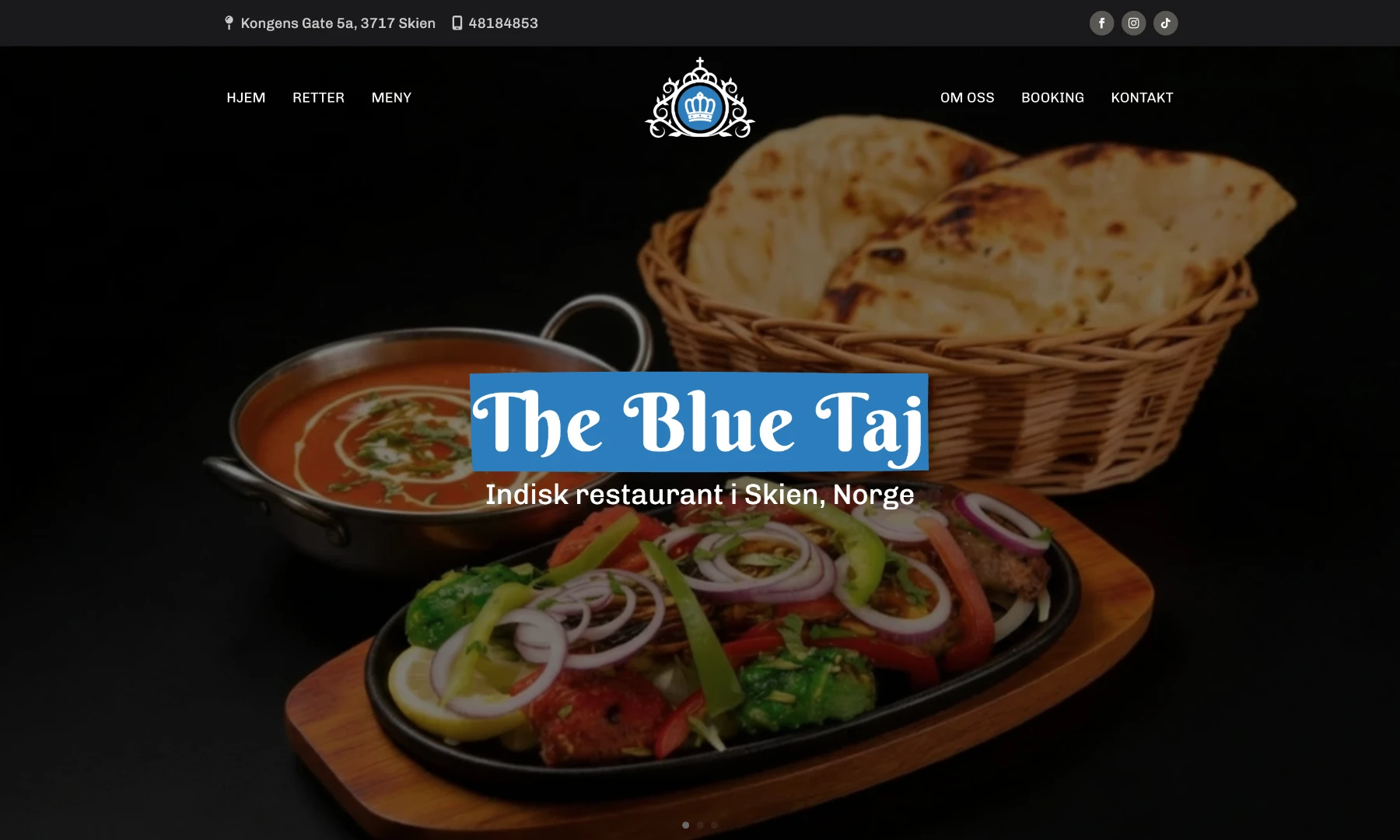
The finished site gives the restaurant a much stronger digital presence. It presents the atmosphere of the place through interior and food photography, makes the menu easy to browse in multiple formats, and supports two important contact paths: general inquiries and simple table reservation requests.
Challenge
This project was not only about replacing an outdated design. The bigger goal was to turn the website into something the restaurant could actually use day to day.
For a restaurant, the menu is one of the most important parts of the website, but it also needs to be easy for staff to update. That meant the backend structure had to be simple and familiar enough for the client to manage without ever touching layout settings, page builder structure, or code.
The site also needed to work well on mobile, keep the visual language consistent, and make important actions visible throughout the experience. Address, phone number, reservation flow, and ordering options all had to stay easy to reach rather than being hidden away on one page.
Menu system
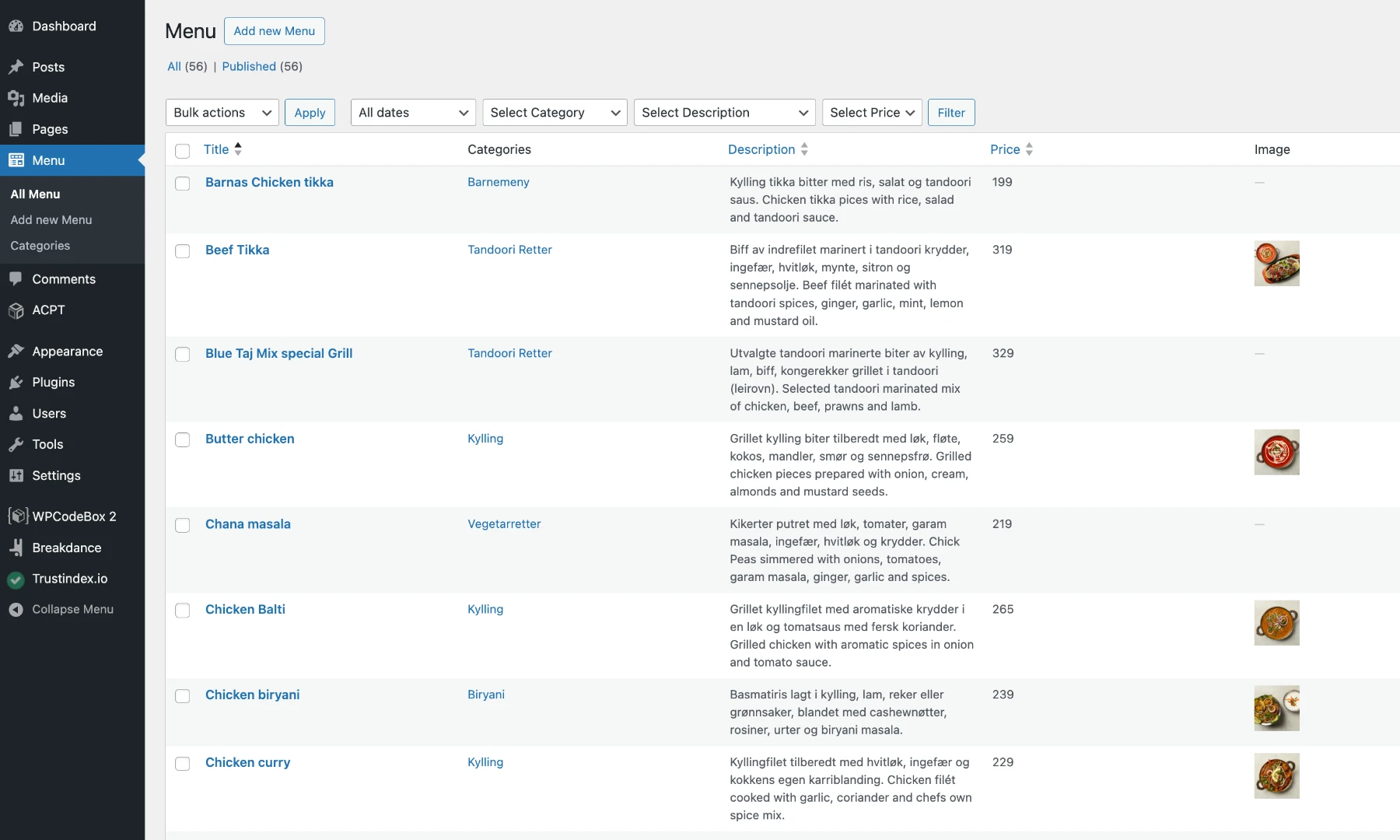
ACPT was the key piece that made the menu workflow work properly. I created a custom post type called Menu, where admins can add and manage menu items directly from the WordPress dashboard using a familiar interface.
Each menu item can store fields such as price, description, category, allergies, spice level, image, extra notes, and menu order. That gives the client one central place to manage the entire menu instead of editing the same information manually in multiple layouts.
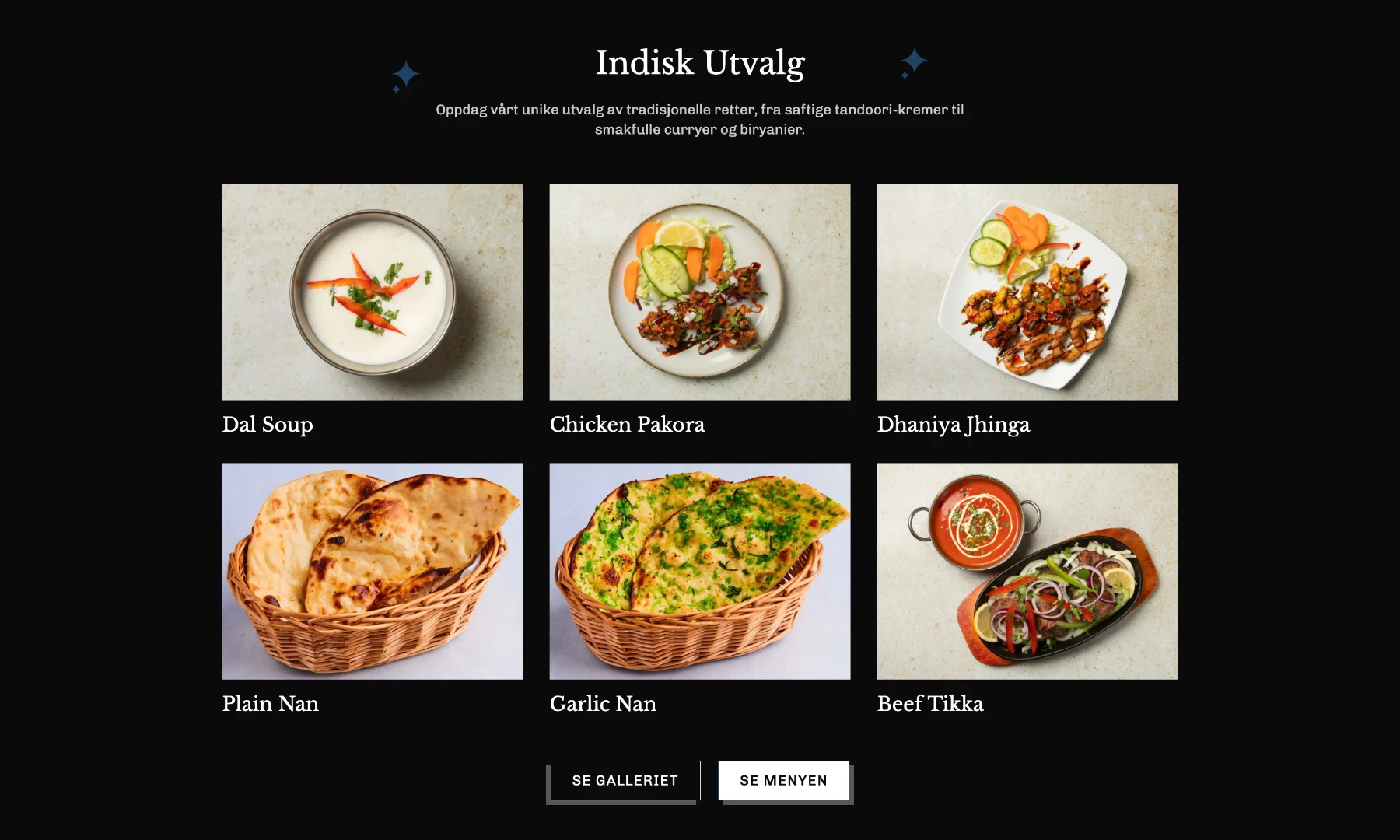
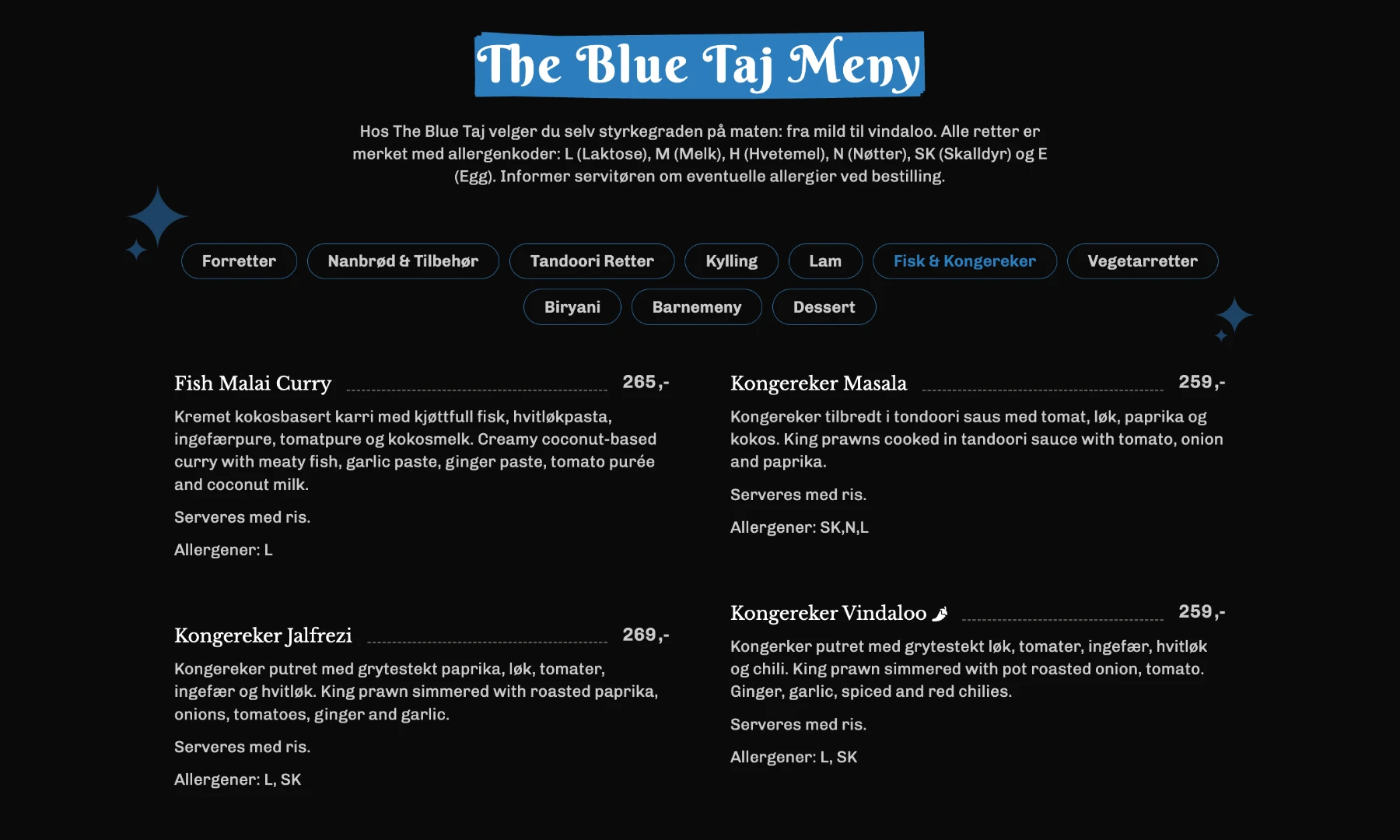
With Breakdance Pro dynamic data, I then built different frontend presentations that pull from that same source. One page focuses more on visual presentation with dish images, while the main Menu page shows items in a list format with on-page category filters to make browsing easier.
Conditional logic also plays a useful role here. Allergy and spice-level details appear only when those fields are filled in for a given item. If the information is not relevant for that dish, nothing extra is shown. That keeps the menu cleaner while still supporting detailed item information where needed.
Contact and ordering flow
The final website includes 5 Norwegian-language pages in total: Home, About, Meals, Menu, and Contact. The Contact page supports two separate inquiry types so users are not forced into one generic form.
One form handles standard contact requests, while the other works as a lightweight reservation flow. Visitors can choose a date, specify the number of people, and send a booking inquiry for a table without unnecessary friction.
Online ordering was handled differently. Rather than building a custom ordering system into the website, I implemented a modal popup that points users to third-party delivery providers. That keeps the site focused and lightweight while still supporting the ordering behavior the restaurant needs.
Throughout the website, key calls to action such as the address, phone number, and booking prompts are repeated in sensible places so users can act quickly from more than one section.
Result
The final result is a faster, lighter, and much more usable restaurant website than the old one-page template it replaced. The visual direction uses a dark color palette with white text and buttons, which fits the restaurant aesthetic while keeping the site consistent and readable across devices.
More importantly, the backend is genuinely practical for the client. Staff can maintain the menu from one structured admin area, update dish information without affecting design, and keep the restaurant website current without needing technical help for every small change.
This project is a strong example of why the ACPT + Breakdance Pro combination works so well for content-driven business websites. It allows for a tailored frontend while keeping ongoing management simple for the client.