Project overview
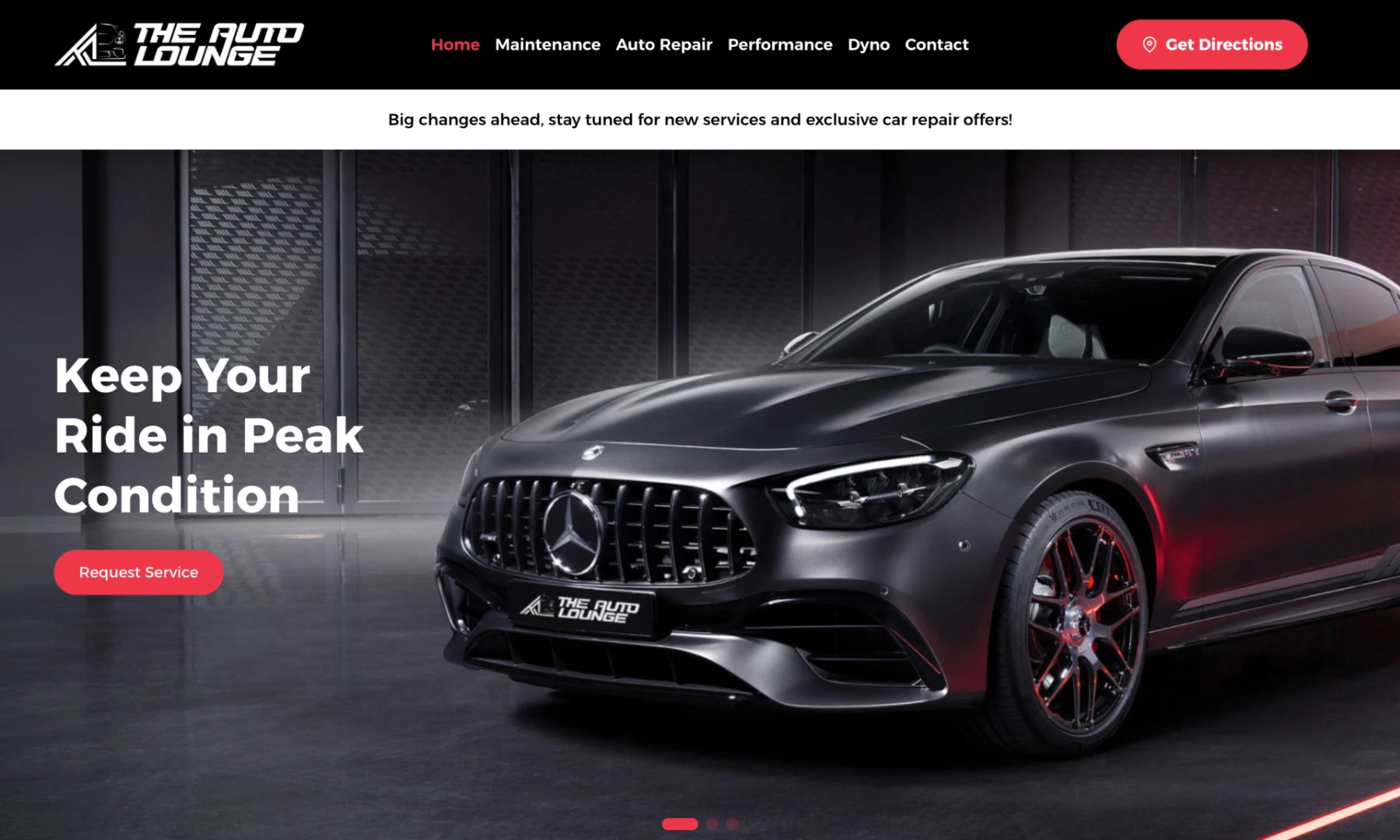
The Auto Lounge is an auto repair website I built in WordPress as part of the WebmastersDesktop team for a Michigan client. The project was much broader than a typical local service site, with a large amount of service content, vehicle coverage, and supporting landing pages that had to stay useful for both visitors and search engines.
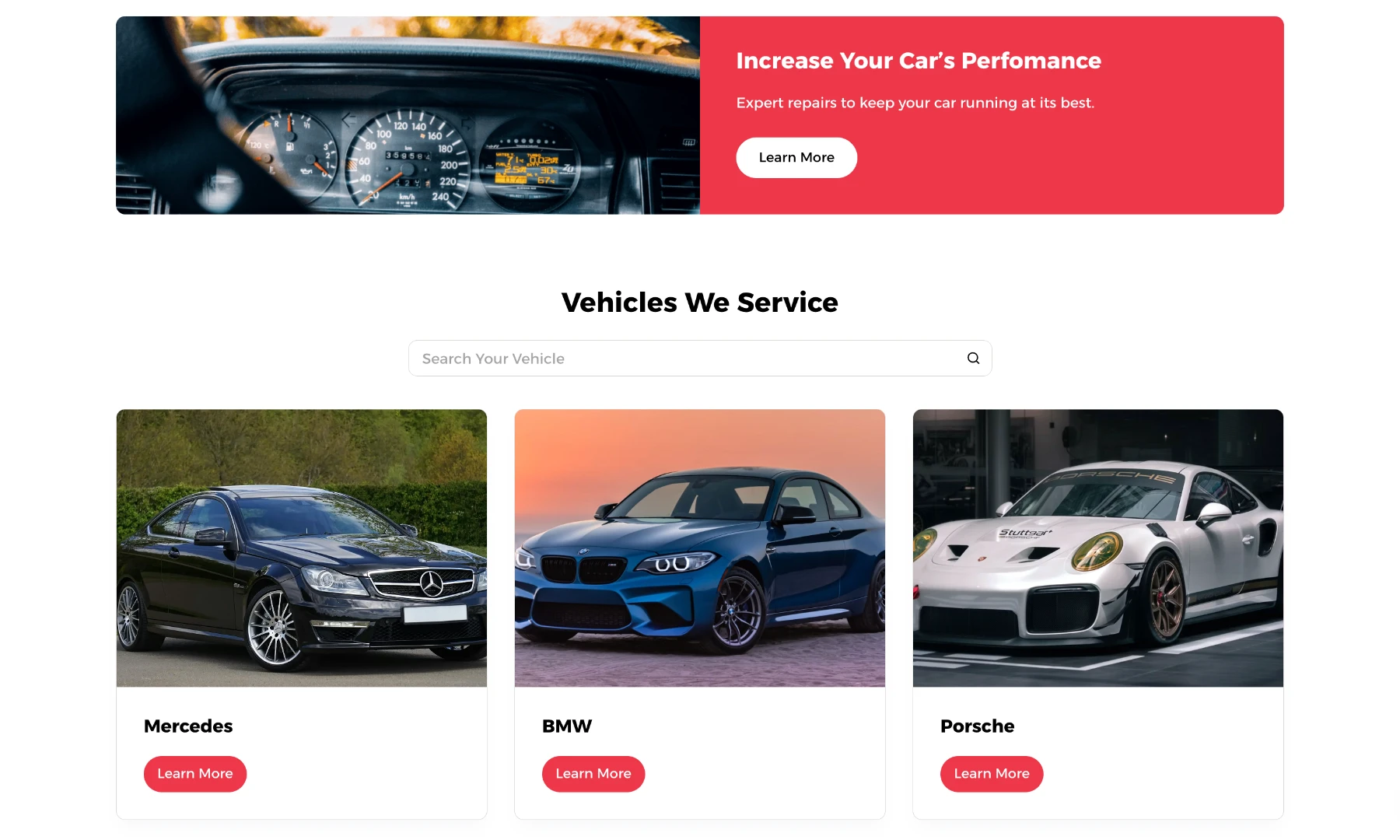
The final implementation includes 30+ service pages and 50+ vehicle-specific pages, supported by a structure that helps users quickly understand what the shop offers and move toward booking or contacting the business.
Challenge
The main challenge was scale. The website needed to present a wide range of automotive services without feeling cluttered, while still giving each service enough dedicated visibility to perform well in search results. That meant solving both UX and SEO at the same time.
For users, the site needed a clear archive-style overview where they could scan available services and click into the specific one they cared about. For the business, each service also needed its own dedicated page so the site could target a broader set of keywords and build stronger search relevance over time.
Service structure
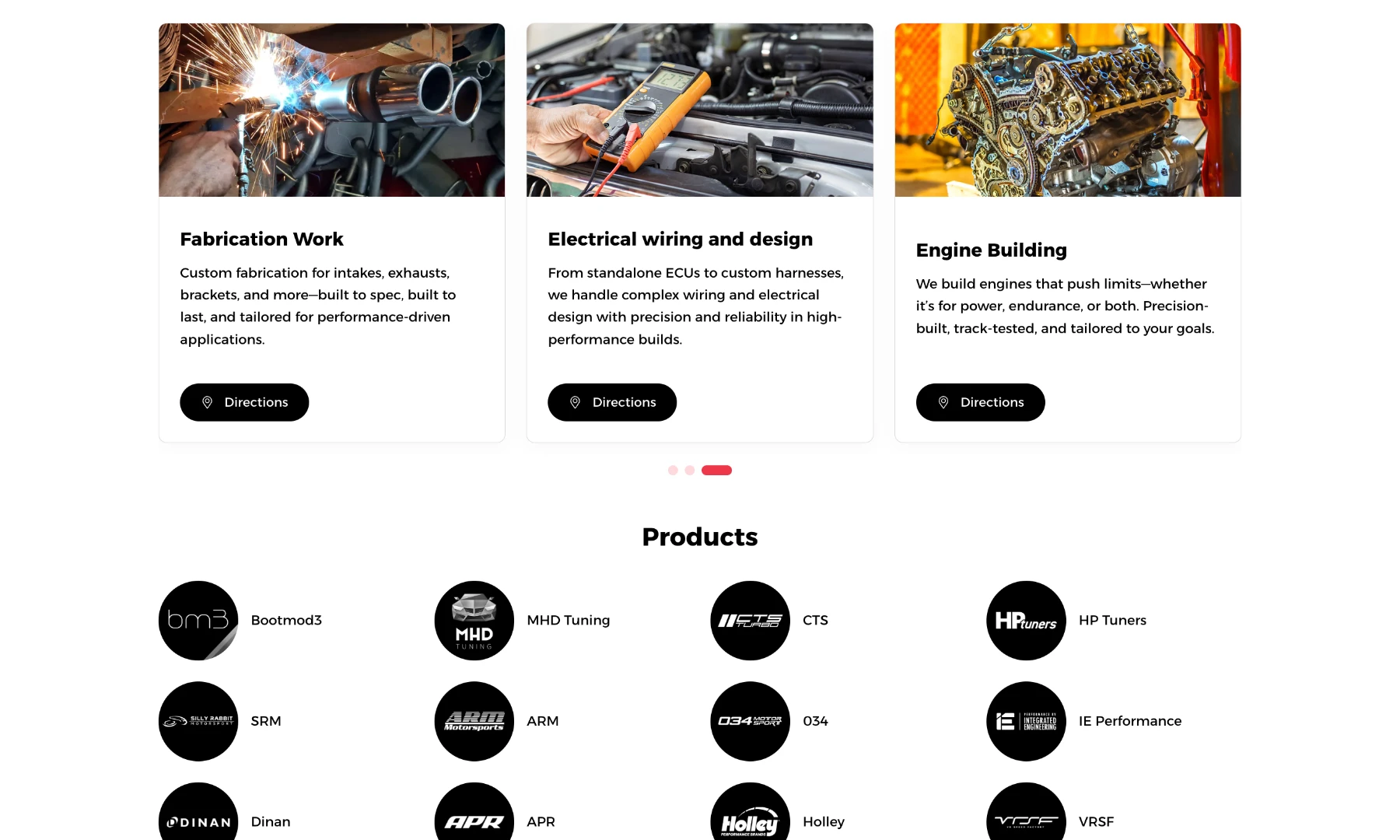
One of the most important parts of the project was the services section architecture. Instead of burying everything on one long generic page, I created a dedicated services archive that acts as a clean entry point into the content. Visitors can browse the full list in card format, then click through to read more about each individual service.
The video below shows that archive experience. It highlights how the website organizes many service categories into a single scannable page without overwhelming the user.
Solution
I built the project with WordPress, using Blocksy + Greenshift for scalable page building and a consistent visual system across many page types. I also used ACF to define custom post types and structured fields for the vehicle pages, which made the catalog easier to expand and maintain as more entries were added.
That structure made it possible to create dedicated pages for individual services and vehicle-related content while keeping the editing workflow manageable on the backend. It also gave the business a stronger content footprint, since each page could target more specific repair terms and location-driven search intent instead of relying on a small number of broad pages.
On the conversion side, I implemented booking and contact forms so visitors could move from browsing into inquiry without friction. The end result is a content-heavy automotive website that remains organized for users, useful for search visibility, and practical for long-term management.