Project overview
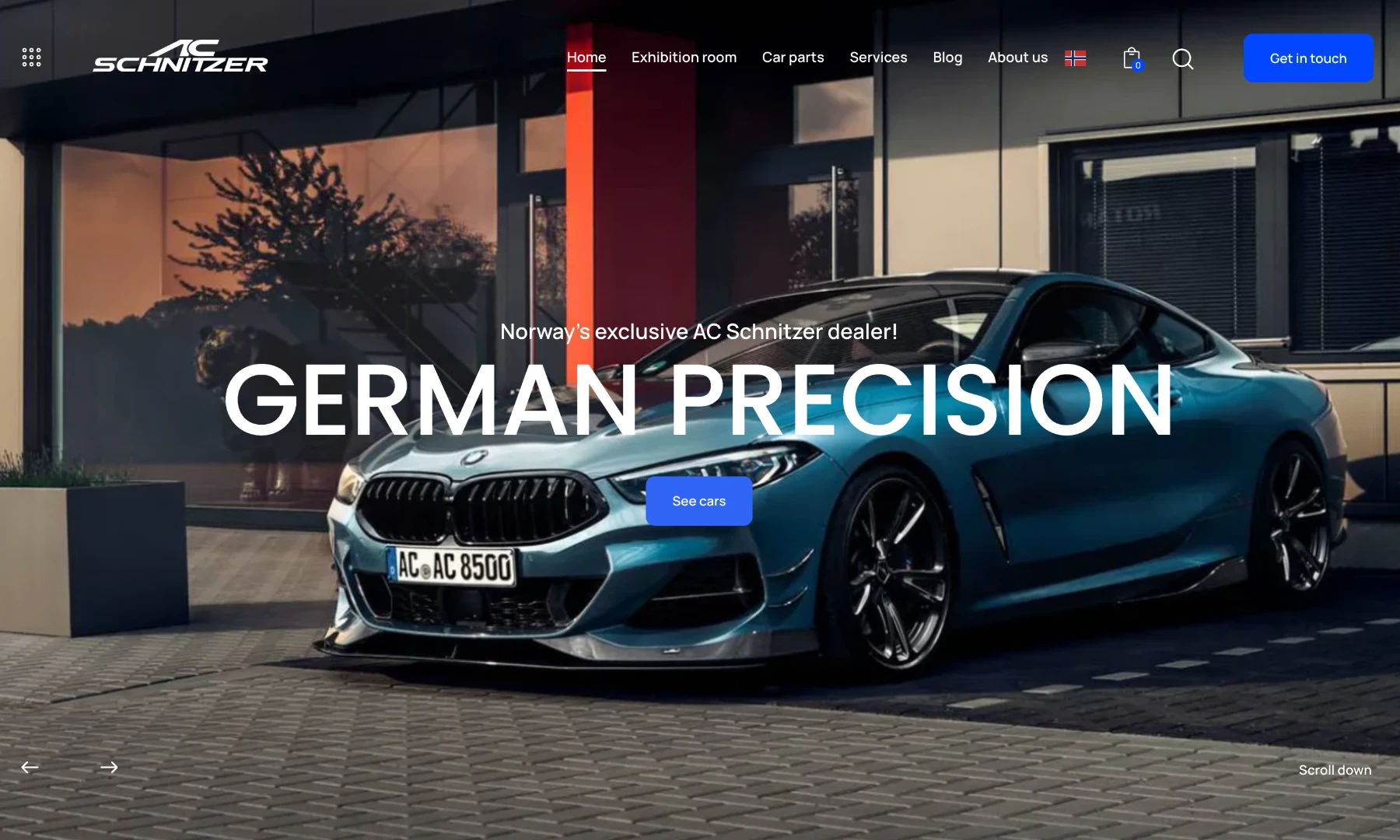
AC Schnitzer is a tuning brand based in Aachen, Germany, focused on BMW and MINI cars, as well as BMW motorcycles. This website, however, was built for the official Norwegian distributor rather than the German parent company itself.
The project needed to do more than present the brand. It had to support a WooCommerce storefront for performance parts, a separate inventory section for used vehicles listed on the local market, and a bilingual experience for Norwegian and English users.
Because delivery speed was a major requirement, I used a WordPress template as the base rather than building everything from scratch. The stack was WordPress, Elementor, and WooCommerce, with the template already providing a cars custom post type, which turned out to be useful because the client was also listing used vehicles for sale.

Challenge
The real difficulty in this project was not visual design. It was operations. Two things made the build technically interesting: synchronizing a large parts catalog from the official German store, and making a bilingual storefront work under real budget constraints.
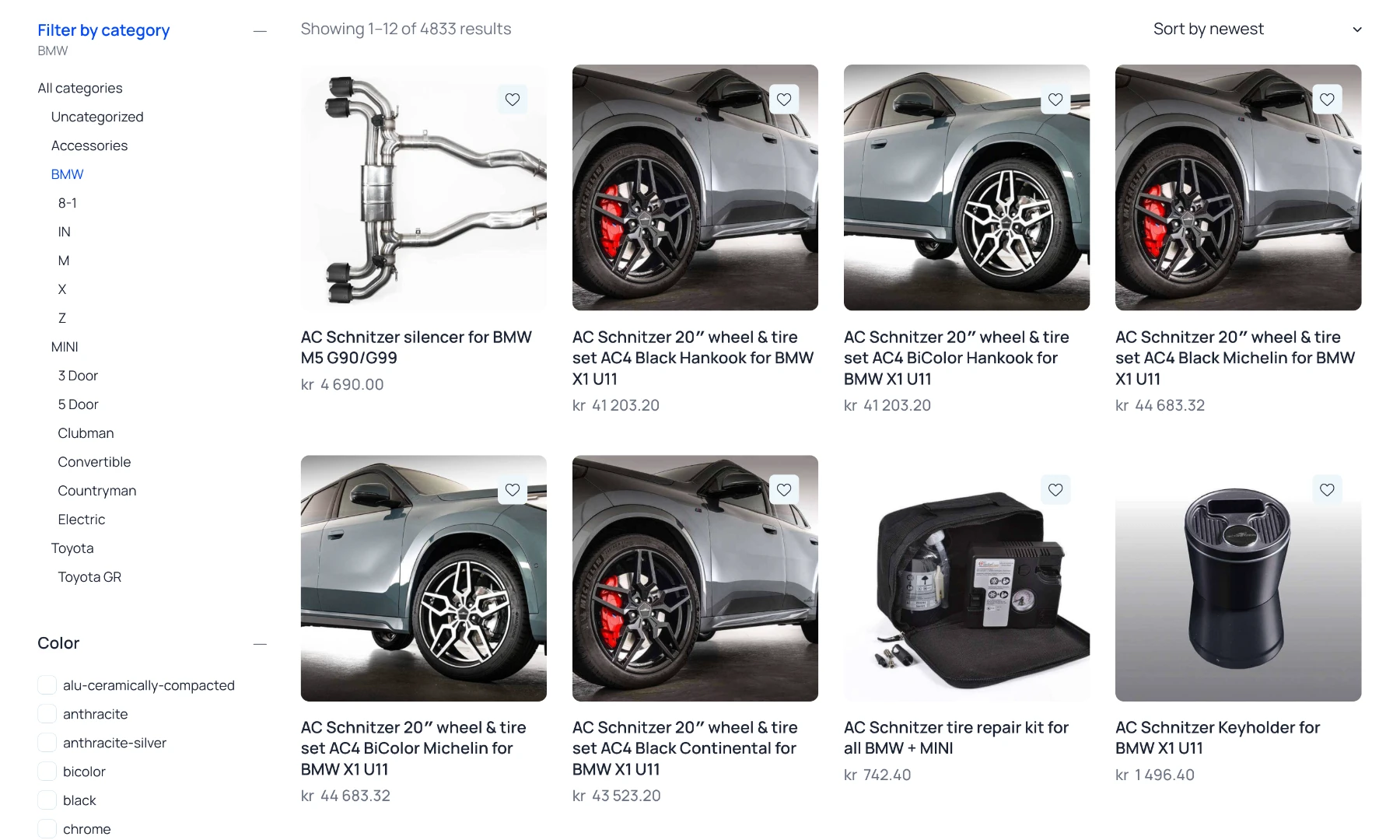
The car-parts store was the heavier side of the project. At the time of development, it involved 5,000+ products, and the client wanted the Norwegian site to stay aligned with the German source store. If a product was added there, it should appear here. If it was removed, disabled, or sold out there, the Norwegian store had to reflect that as well.
Challenge 1: Product synchronization without an API
The biggest technical problem was that the German store had no public API endpoint or official synchronization method for this type of catalog sharing. That meant there was no ready-made WooCommerce integration to rely on.
Because the requirement went beyond a typical WordPress plugin setup, another developer joined the project to handle the external automation side. He built a custom system that periodically scanned the German store, generated a WooCommerce-compatible CSV file, and exposed that file through a secured server endpoint. In practice, that became our own internal API layer.
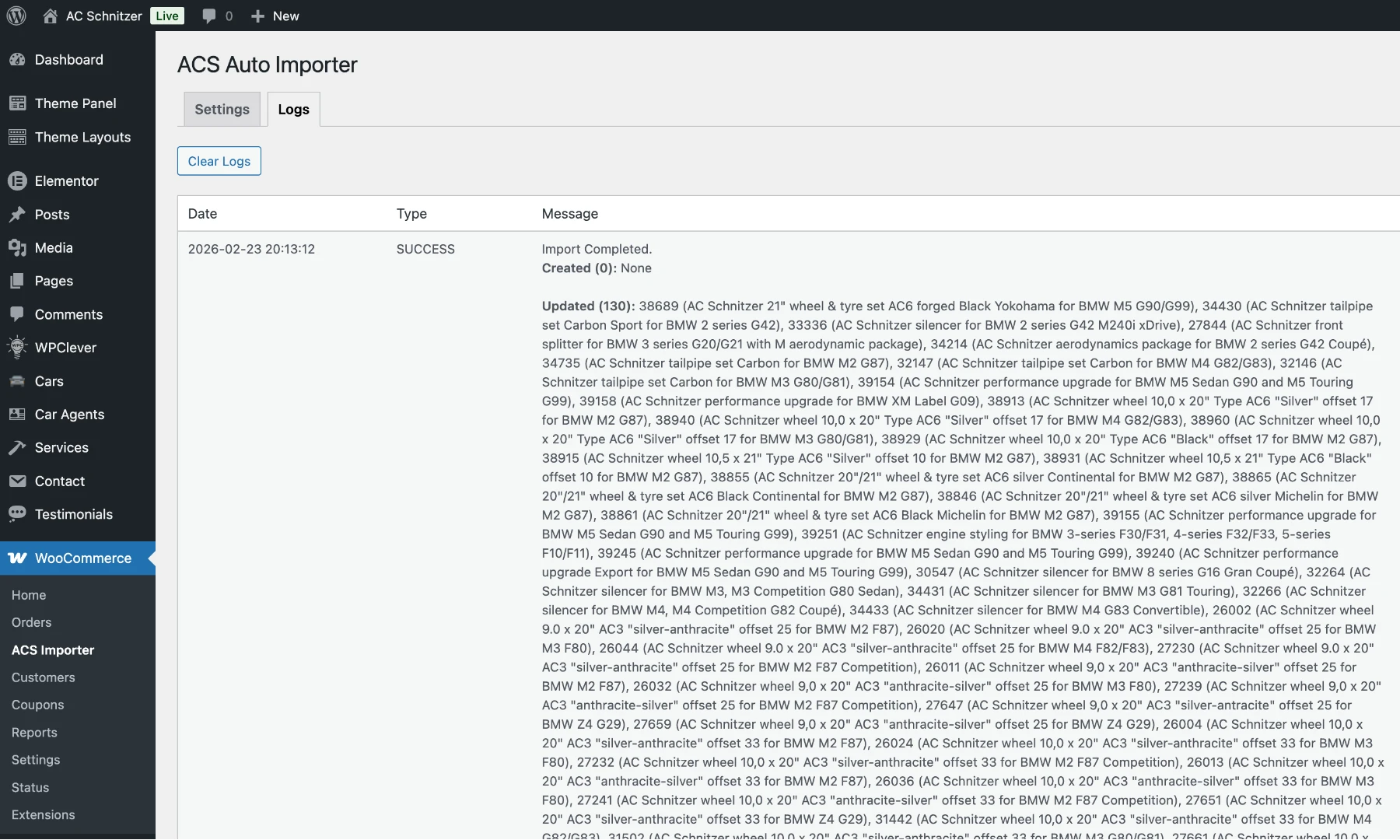
My part was making WordPress consume that data reliably. I built a custom plugin called ACS Auto Importer that runs on a scheduled cron job and pulls the CSV from the secured endpoint once a day, or on any other chosen interval. The plugin imports new products, updates existing ones, and keeps the catalog aligned with the source store.
I also added a WordPress admin interface with import logs, so the client could see exactly what happened during each run: how many products were updated, when it happened, and whether anything failed. To keep that practical long-term, I included a retention setting for the log file so it would not grow indefinitely.
Challenge 2: Bilingual delivery on a large imported catalog
The second challenge was language. Because the business operates in Norway, the default language needed to be Norwegian so the site could make sense to users and index properly in local search. That part was manageable for regular pages. I translated those with AI assistance and configured the site so visitors could switch between Norwegian and English.
The real issue was the imported catalog. Product data was coming from the source store in English, or optionally German, while the site itself needed to be Norwegian-first. That meant the brand pages and the store pages were speaking different languages by default.
A full server-side translation pipeline for 5,000+ imported products would have required a larger ongoing budget, so the client chose the simpler route. I handled the regular pages in Norwegian first, then used LocoAI, Loco Translate, and GTranslate to make the storefront usable in both Norwegian and English.
In practice, that meant a JavaScript-based translation layer for the imported catalog rather than fully stored translated product pages. It worked well for visitors, but it did not create a separately indexable multilingual product catalog. Within the project constraints, it was the right tradeoff between cost, speed, and usability.
Solution and result
The finished website combines brand presentation, used vehicle listings, and a large WooCommerce parts catalog in one system. The use of a template helped speed up delivery, but the real value of the project came from the custom logic added around it, especially the synchronization workflow and admin-side visibility.
On the front end, I also added smaller touches that gave the website a more polished feel, such as the homepage blog slider shown below, which scrolls horizontally with a custom pointer interaction.
The final result is a fast-delivered automotive website that handles a surprisingly complex backend requirement under the hood. It gave the client a bilingual storefront, used car listings, and a scalable path for keeping thousands of products aligned with a source store that did not offer a proper integration to begin with.